
NEWSLETTER
July – September 2025
Leva’s Jewelry
Where passion and personality meet since 1990, we welcome you to embark on our journey not just as customers, but as witnesses to our story. We don’t chase trends – we pursue meaning. Because beauty isn’t perfection. It’s what’s left standing.
Our story began with my Dad and a briefcase carrying a vision – and a few jewels too. Every piece we offer is a reflection of the vision we carry, persevere and dare to still feel. My dad Matt and I, and our incredible team welcome you to come where we think you’ll find yourself here because we think you’re beautiful, inside out.
True alchemy lives not only in our creations and services, but in the connections we’ve built over decades with customers and the stories they’ve shared. Our legacy isn’t just sparkling jewels and measuring carats, but in the weight of lasting pure memories, and turning imperfections into heirlooms. We may have a few cracks… but nothing a little love and Kintsugi can’t fix.
Kintsugi – “Golden Joinery”
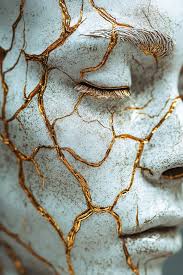
Kintsugi, a Japanese repair technique dating back to the 1500’s is an ancient art where powdered gold is mixed with lacquer to mend broken pottery. Rather than hide flaws, it highlights them by turning damage into beauty. There’s no shame in imperfection because Kintsugi transforms the broken into art. The golden seams just don’t repair, they honor the artisan and their art. This graceful art reframes loss as resilience. On that note … we invite you to rewrite your story in gold or create a new piece of your own.
Jewelry 101 – Karat or Carat?
It is important that you understand what you buy and feel secure of your purchase. If you have questions – we have answers. If you are new to jewelry and feel intimidated, fear not – let’s jump into the basics.
Gold is measured in karats and diamonds are measured in carats.
Karats(K):
24K is pure gold. While 24K is pure it also is the softest form of gold and is not always practical for frequent wear.
18k is 75% gold and 25% alloy making it reasonable for frequent wear.
14K is 58.3% gold and 41.7% alloy. This is often a popular choice for quality, durability and daily wear.
Gold pieces can be purchased in the form of yellow, white or rose gold. If a piece of jewelry is labeled gold-filled, gold plated or gold vermeil it carries a significantly lower quantity of gold and as a result the value drops dramatically.
Carats:
A diamond’s quality is determined by the 4 C’s: Cut, Color, Clarity and Carat weight.
Cut: round, princess, emerald, and princess tend to be the most common shapes of a diamond. However, many people enjoy pear, oval, marquise, cushion and even heart cut diamonds.
Color: This is very important as diamonds can range from colorless (rare and highest value) to yellow or brown ( least valuable). Color is graded on a scale from D-Z. D being colorless and Z being lightly colored.
Clarity: This measures internal and external inclusions ( flaws) in a diamond. Less inclusions = higher value. Inclusions can also be filled. It takes an educated eye to look through a loop correctly to see an inclusion filled.
This also plays a role in determining a price of a diamond. Clarity is measured on a grading scale ranging from Flawless,internally flawless, VVS1, VVS2, VS1, VS2, SI1, SI2, I1, I2, 13. Most consumers will find themselves pleased with a diamond in the range of VVS1- VS2).
Carat: The size of the diamond will determine the carat weight. 1 carat is equal to 0.2 grams. A larger diamond will only retain its value if it is accompanied by decent color and clarity.
Fun fact: marquise, pear, oval and emerald cuts naturally appear larger and have gained traction in today’s current trend cycle.
Heated Topic: Lab vs Natural
The diamond market is changing at a rapid pace. Lab diamonds are flooding the market as they are more affordable, offer ethical sourcing and striking quality. Which will you choose?